
PACE Framework - Your Perfect Prospecting Week
Issue #24: The structured weekly rhythm that ensures consistent opportunity generation without burning out or becoming reactive

Hey there Win Circle,
Most building materials sales reps approach prospecting like a random side activity rather than a disciplined business practice.
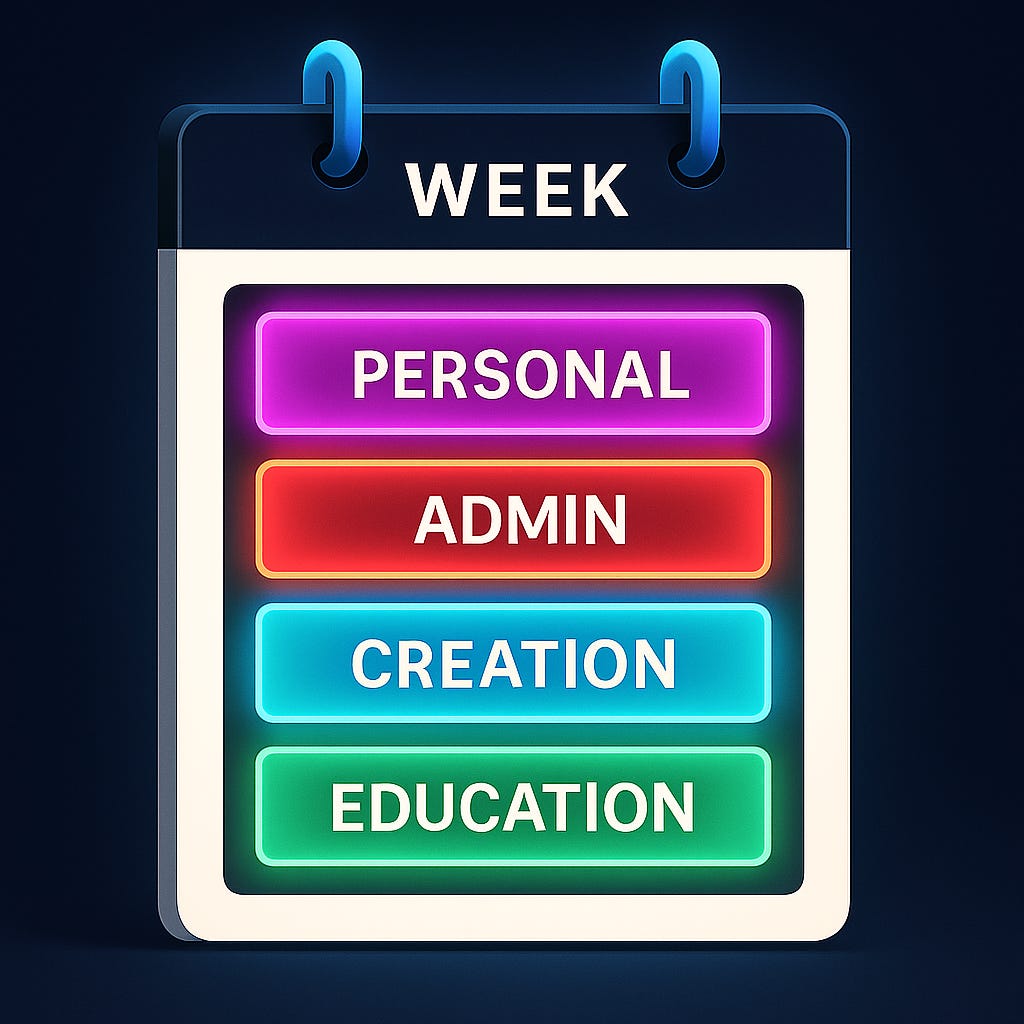
They make calls when they have spare time, send emails when they think about it, and research prospects when existing opportunities go quiet. Their prospecting happens sporadically between client meetings, proposal writing, and administrative tasks.
This scattered approach to opportunity generation creates feast or famine sales cycles or as many of my teams would have heard my say ‘boom and bust pipelines’. When existing opportunities are active, prospecting stops. When the pipeline goes quiet, panic prospecting begins. You're always either too busy to prospect or too desperate to prospect strategically.
But what if your prospecting happened consistently regardless of how busy your existing opportunities kept you? What if you had structured weekly rhythms that protected time for future opportunity generation? What if your calendar supported your success rather than sabotaged it?
Today we're implementing the PACE Framework, the structured weekly rhythm that ensures consistent opportunity generation without burning out or becoming reactive to daily demands.
Why Structured Prospecting Matters in Building Materials
Our industry has unique characteristics that make consistent prospecting both more challenging and more critical:
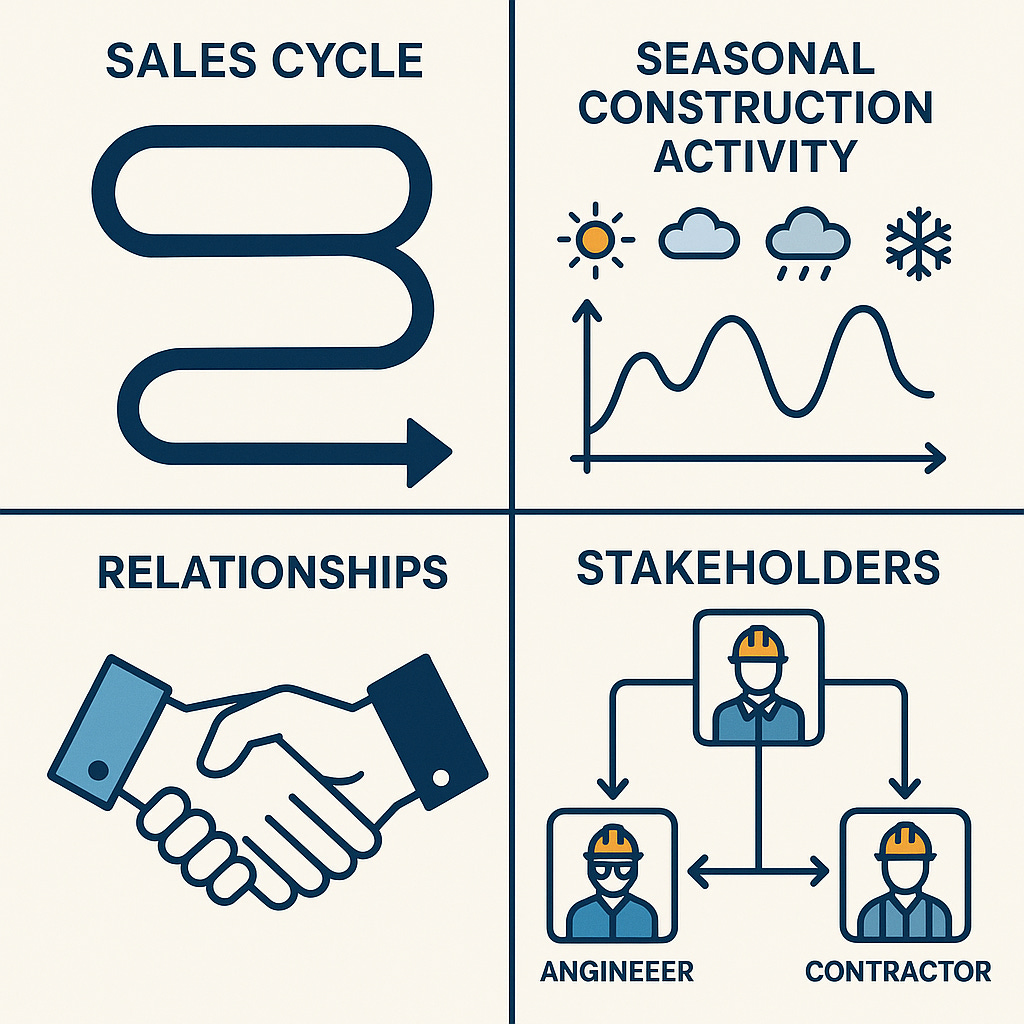
Long Sales Cycles Require Continuous Feeding With 6-18 month sales cycles, you need constant new opportunity generation to maintain pipeline health. Sporadic prospecting creates dangerous gaps in future revenue.
Seasonal Project Patterns Affect Opportunity Flow Construction activity follows seasonal patterns with busy periods and quiet periods. Consistent prospecting smooths these natural variations.
Relationship Based Selling Needs Regular Nurturing Building materials sales depends on relationships that require regular contact and value delivery. Sporadic contact damages relationship quality.
Complex Stakeholder Engagement Takes Time Building relationships with architects, engineers, and contractors requires multiple touchpoints over extended periods. This can't be rushed or crammed into occasional prospecting bursts.
The PACE Framework Overview
PACE creates structured weekly rhythms that protect time for each essential prospecting activity:
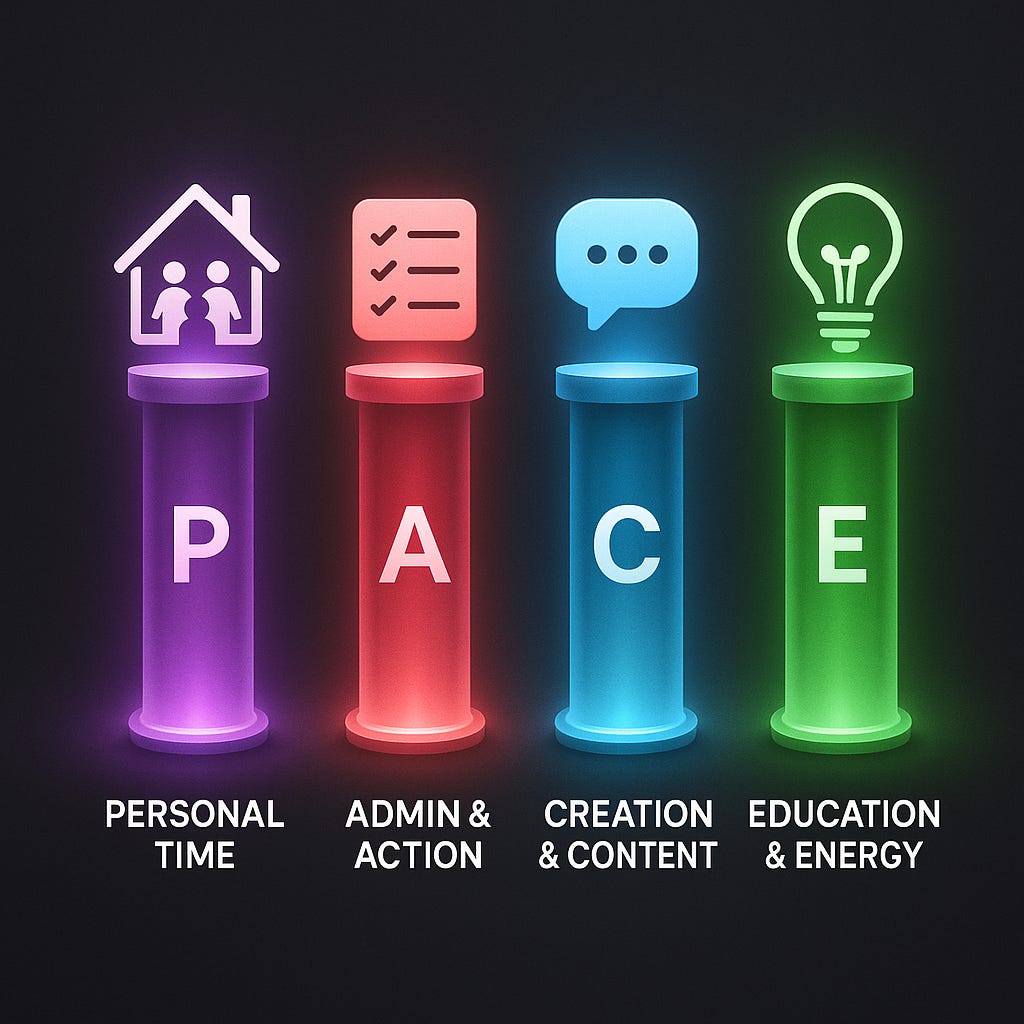
P = Personal Time (Purple) Family events, quality time, being present. This isn't "extra" time, it's your foundation. Without protected personal time, professional performance deteriorates.
A = Admin & Action (Red) Calls, meetings, operational tasks. Batch these together to avoid constant interruption and context switching throughout the week.
C = Creation & Content (Blue) Prospecting, outreach, relationship building. The activities that generate future opportunities. This gets protected time slots, not leftover time.
E = Education & Energy (Green) Learning, skill development, industry intelligence. Staying current with market trends and improving your capabilities.
The Perfect Prospecting Week Design
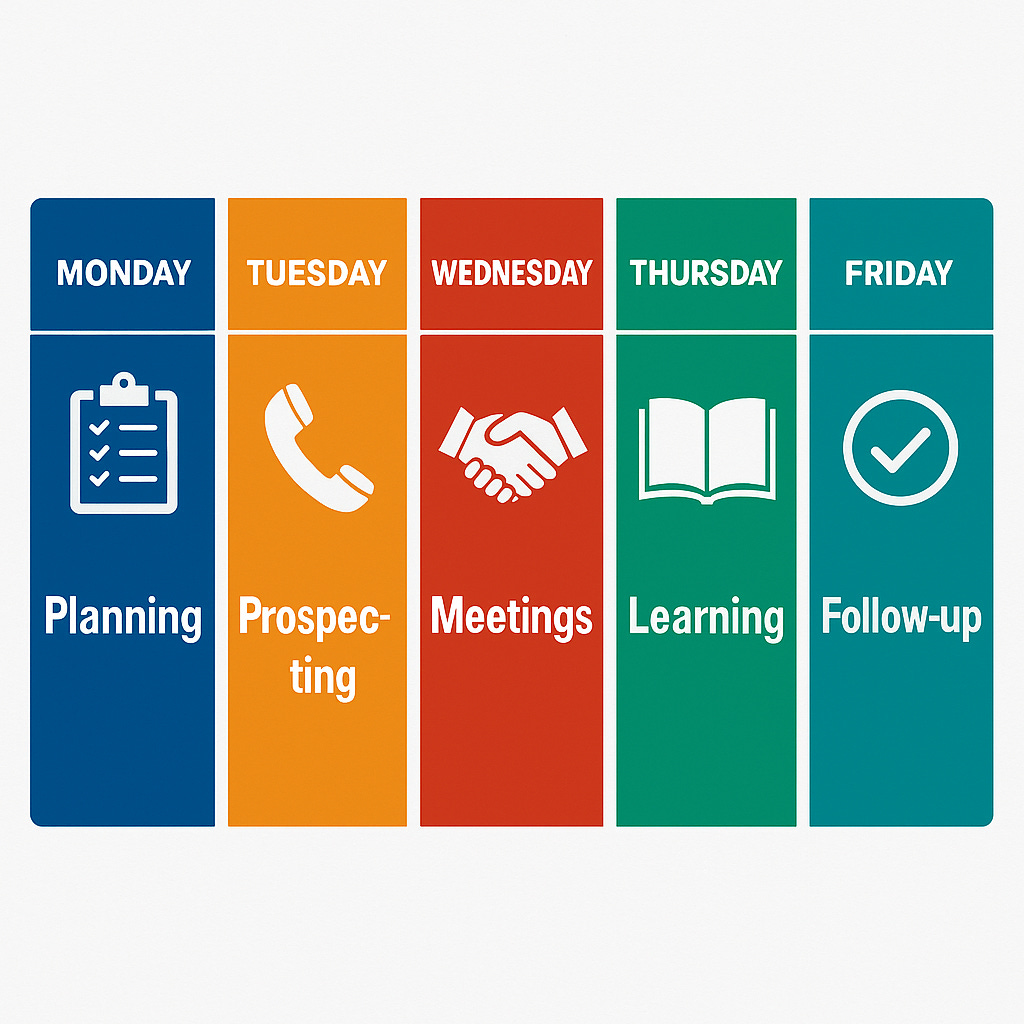
Monday: Planning & Preparation (Admin Focus)
Review market intelligence gathered over weekend
Plan week's prospecting activities and target list
Prepare research and messaging for priority prospects
Administrative tasks and pipeline updates
Time Allocation:
9:00-10:30: Weekly planning and priority setting
10:30-12:00: Pipeline review and opportunity updates
14:00-15:30: Research and messaging preparation
15:30-17:00: Administrative tasks and CRM updates
Tuesday: Creation & Outreach (Prospecting Focus)
Execute planned outreach campaigns
Make prospecting calls to new and existing prospects
Send researched emails and LinkedIn messages
Follow up on previous outreach attempts
Time Allocation:
9:00-10:30: Email outreach and LinkedIn engagement
10:30-12:00: Prospecting calls and voicemails
14:00-15:30: Research and personalised outreach
15:30-17:00: Follow-up calls and relationship maintenance
Wednesday: Meetings & Relationships (Action Focus)
Client meetings, site visits, and technical discussions
Relationship building meetings with prospects
Industry events and networking activities
Collaborative work with internal teams
Time Allocation:
Protected for meetings, travel, and relationship activities
Schedule all non-urgent meetings on Wednesdays
Block time for relationship building rather than just sales meetings
Thursday: Education & Intelligence (Learning Focus)
Industry publication review and market intelligence
Skill development and training activities
Conference attendance or webinar participation
Competitive intelligence and market analysis
Time Allocation:
9:00-10:30: Industry publication review and intelligence gathering
10:30-12:00: Skill development or training content
14:00-15:30: Market analysis and competitive intelligence
15:30-17:00: Knowledge organisation and insights documentation
Friday: Follow-up & Planning (Completion Focus)
Follow up on week's outreach and meetings
Plan next week's activities and priorities
Personal development and reflection
Relationship nurturing and value delivery
Time Allocation:
9:00-10:30: Follow-up on week's activities
10:30-12:00: Next week planning and preparation
14:00-15:30: Relationship nurturing and value delivery
15:30-17:00: Week review and personal development
The Appointment Booking Optimisation System
Within your PACE framework, optimise your prospecting effectiveness using proven ratios: -
Key Performance Ratios:
Gatekeeper Bypass Ratio: Calls that reach decision makers ÷ Total calls made
Appointment Booking Ratio: Appointments booked ÷ Decision makers spoken to
Ratio Improvement Strategies:-
Improving Gatekeeper Bypass Ratio (Target: 10-15%):
Improve targeting: Better research on contact details and timing
Enhance messaging: What you say to gatekeepers and how you say it
Optimise timing: When you call and which days work best
Strengthen preparation: Data quality and contact intelligence
Improving Appointment Booking Ratio (Target: 70-80%):
Enhance conversation quality: What you say and ask during calls
Improve tonality: Pace, inflection, and professional confidence
Strengthen objection handling: Responses to common concerns
Develop curiosity: Questions that create genuine interest
The Cold Outreach Checklist Integration
Use this checklist to ensure your PACE framework includes all essential elements:
Your Weekly Outreach Checklist:
□ Hyper-targeted prospect list updated and prioritised
□ Pain-focused messaging prepared for each prospect type
□ Mental warm up routine completed before prospecting blocks
□ Consistent daily prospecting blocks protected in calendar
□ Conversion metrics tracked (not just activity volume)
□ Content ecosystem supporting outreach with valuable insights
□ Personalisation research completed (real insights, not fake personalisation)
PACE Implementation Strategy
Week 1: Design Your Perfect Week
Map your current weekly schedule and identify time wasters
Design your ideal PACE schedule with protected time blocks
Set up calendar blocks for each PACE component
Prepare tools and resources needed for each activity type
Week 2: Test and Adjust
Implement your PACE schedule for one week
Track what works well and what needs adjustment
Identify obstacles and interruption patterns
Refine time allocations based on actual requirements
Week 3: Optimise and Systematise
Adjust PACE schedule based on week 2 learning
Create standard operating procedures for each time block
Set up systems to protect time blocks from interruptions
Establish measurement systems for each PACE component
Week 4: Integrate and Sustain
Fully integrate PACE framework into weekly routine
Train others on your protected time blocks
Create contingency plans for disrupted weeks
Establish review and refinement processes
PACE Success Metrics
Track these indicators to measure PACE framework effectiveness:
Consistency Metrics: Percentage of planned PACE activities completed each week Efficiency Metrics: Time spent on high-value activities vs reactive tasks Prospecting Metrics: Number of new prospects contacted, and relationships developed Learning Metrics: Industry intelligence gathered and skills developed Balance Metrics: Personal time protection and overall work-life integration
Common PACE Implementation Mistakes
Perfectionism Paralysis: Waiting for the perfect schedule rather than starting with good enough and iterating
Interruption Acceptance: Allowing others to schedule over protected time blocks instead of defending them
All Work PACE: Forgetting to protect personal time, leading to burnout and decreased effectiveness
Reactive Scheduling: Letting urgent tasks override important PACE activities
No Flexibility Planning: Creating rigid schedules without contingency plans for busy periods
Your PACE Framework Action Plan
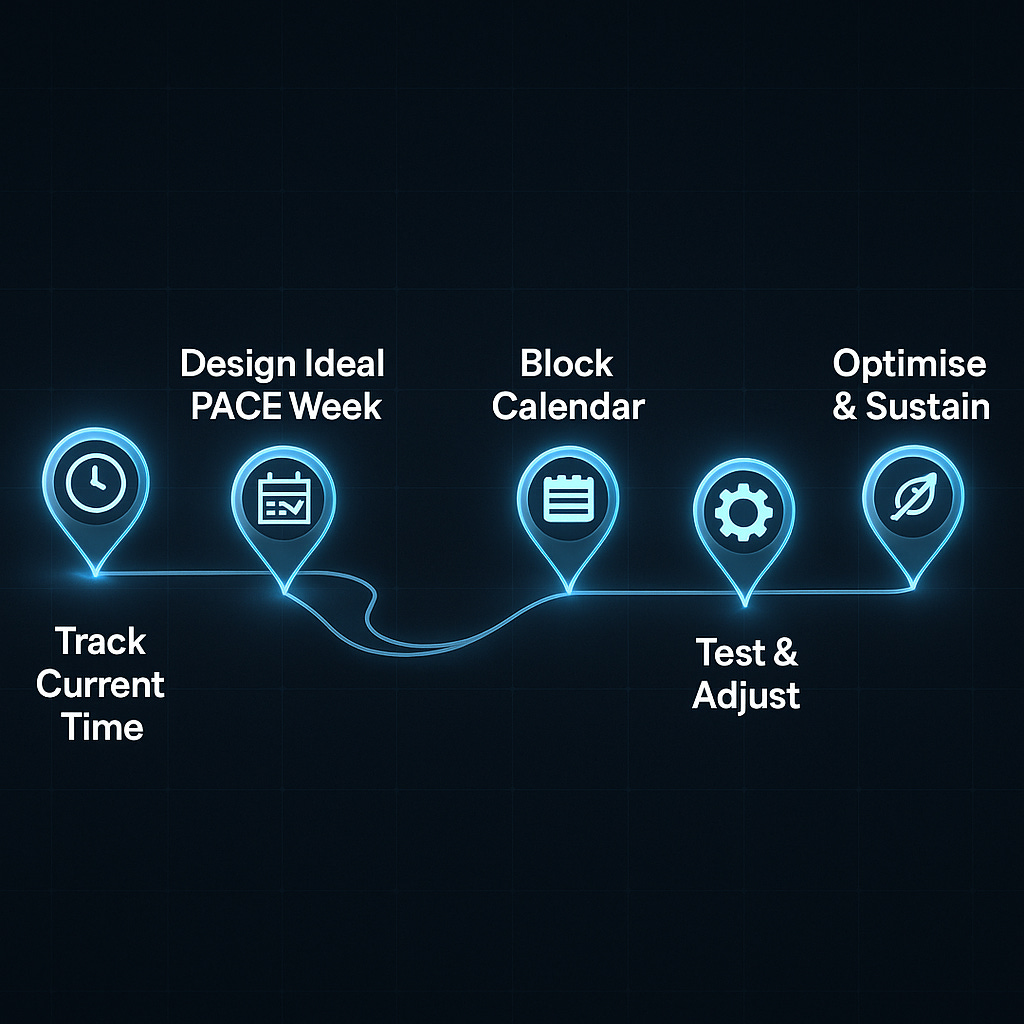
This week, design and test your Perfect Prospecting Week:
Current State Analysis: Track how you currently spend your time for one week
PACE Design: Create your ideal weekly schedule using the PACE framework
Calendar Setup: Block time in your calendar for each PACE component
Tool Preparation: Gather resources needed for prospecting, learning, and administrative time blocks
Week 1 Test: Implement your PACE schedule for one week and track results
Remember: Even hitting 50% of your planned PACE activities beats being reactive to your inbox and daily demands.
Next week, we'll cover Curiosity Driven Messaging, the outreach frameworks that generate 40%+ response rates from building materials stakeholders.